
- Mar 7
- 4 min read
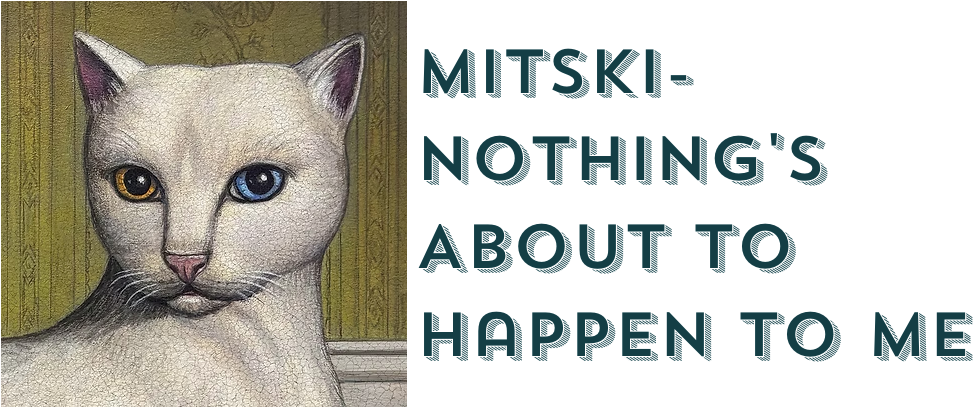
It seems unthinkable that a songwriter who’s work is as nuanced and understated at Mitski’s could be as overwhelmingly successful as she is: the industry is ever hard to predict, and somehow, Laycock’s poetic explorations of self-worth and identity have earned her worldwide critical and commercial acclaim. 2023’s ‘The Land Is Inhospitable and So Are We’ was yet another slam dunk for Mitski, with single ‘My Love Mine All Mine’ becoming her first charting hit. The follow-up— 2026’s ‘Nothing’s About to Happen to Me’— walks a similar path, though the results aren’t quite as exciting this time around.
Mitski’s work has always tended towards stripped-back arrangements (save for the more energetic pop excursions we saw on 2018’s ‘Be the Cowboy’ and 2022’s ‘Laurel Hell’) and her new record is much the same, save for some explorations of rock music that crop up every once in a while. The album is hardly lacking in terms of instrumentation— opener ‘In a Lake’ fills its soundstage with accordions, for goodness sake, and that’s not even mentioning the grandiose climax the track breaks into by its end— but it’s certainly not a project with its eye on catchy melodies or bold musical choices. Laycock is a storyteller through-and-through, and it’s clear that she values her narrative and emotional moments above typical song structures and hooks: it’s for this reason that ‘Nothing’s About to Happen to Me’ reads more like an audiobook with a soundtrack than your traditional album. Few listeners will be returning to a cut like ‘If I Leave’ for its stock-standard drum beat and lethargic guitar parts, surely— it’s for the song’s grasp on tension and anxiety that it sticks in the mind.
The record is riddled with paranoia and self-doubt, placing the character of Mitski at the dead-centre: for all the calming soundscapes on offer here, this is an incredibly moving and vulnerable listen, an aspect that defines the experience. Laycock takes on a detached point of view for songs like ‘Dead Women’ and ‘Instead of Here,’ questioning how the people around her might react to her absence in a manner that feels entirely relatable— the songwriter is a long ways away from pulling her punches on a lyrical front, laying bare her fears of being dismissed or forgotten. If single ‘Where’s My Phone?’ was a glimpse into the album’s views on fear and distrust in the modern age, ‘I’ll Change for You’ and ‘Rules’ make them absolutely inescapable. Anxiety is as much a part of this album as it is a part of so many listeners’ lives: charming as they may be, the references to Mitski’s relationship with her cat only serve to reinforce the crushing weight of uneasiness that fuels the record.
“Would you have liked me better if I'd died
So you could tell my story the way it ought to be?
You'd find my parents and ask to see my things
Rifle through it all, fill the blanks with what you need”
‘Nothing’s About to Happen to Me’ is a meaningful album, then, but it’s not one you’ll draw that many memorable moments from: the songs themselves are all competently written, certainly, but it’s for their thematic elements that listeners will feel drawn to them. ‘Where’s My Phone?’ is a fairly toothless excuse for a rock number, dialling in some limp guitar tones and a standard vocal delivery from Laycock that doesn’t really serve the song’s desperate energy— the album will go on to utilise brash electric guitars much more effectively on closer ‘Lightning,’ where the instrument is blown-out to unreal levels. Aside from those brief moments though, Mitski’s latest effort is, at least on a musical front, pleasant to an absolute fault. The arrangements on ‘Cats,’ ‘Dead Women’ and ‘Rules’ are incredibly plain, going all in on those ever-reliable lead vocals to steal your attention. ’Nothing’s About to Happen to Me’ will frequently leave you wishing it had just a little something more on offer.
We’d be remiss not to draw special attention to single ‘I’ll Change for You,’ a song that completely bucks the trend we just established. The track’s withdrawn chamber-jazz aesthetic, complete with distant piano progressions and cinematic string and brass inclusions, sits comfortably behind Laycock’s divine singing in a manner that’s easy-on-the-ears without becoming musically vacant. This is arguably the most melodic cut in offer here, and it’s a remarkable success that’ll have your ears pricking up every time (only for Mitski’s musings on low self-esteem in the face of a dying relationship to shatter your heart into a million pieces). It’s not the only moment of true musical intrigue on the record, of course— the sweet violin solo and quiet wurlitzer keyboards on ‘Charon’s Obol’ are lovely touches— but even still, the song becomes a sour point of comparison for the rest of the record. ‘I’ll Change for You’ captures everything you could possibly want from Mitski: it’s positively gorgeous.
Laycock is a remarkably talented artist, and her abilities are as easy to see on ‘Nothing’s About to Happen to Me’ as they are on all her records. Even still, this isn’t quite the cream of the crop as far as her discography is concerned. The record is a potent collection of diary entries and poems that captures ideas of mental health and identity well, certainly, but it’s a project that ultimately leaves you wondering whether it really needed to be musical at all. Mitski’s affinity for catchy hooks and lush arrangements feels underutilised here, and it’s a darn shame— for the moment, we’ll just have to settle for those potent lyrical themes.
Comments